
Whether you are organizing a local street fair in San Francisco or a massive music festival in Coachella Valley, event waste management is no longer just a “nice-to-have” feature—it is a legal and environmental mandate.
California leads the nation in waste diversion laws. From SB 1383 (organic waste reduction) to PRC 42648 (large event reporting), the requirements can be complex. To help you navigate the “Green” Golden State, we’ve compiled the ultimate guide and checklist to ensure your next event is compliant and sustainable.
Why California Events are Different
In California, the goal isn’t just to “pick up the trash.” The state aims for a 75% source reduction and mandatory recycling for any event that attracts more than 2,000 people per day. If you are a “Large Event” organizer, you are legally required to document your diversion efforts and report them to the local jurisdiction. While every city has slightly different requirements, event producers are generally required to file paperwork with the city enumerating their landfill diversion strategies and recycling initiatives for each event.

Phase 1: Planning and Policy
Success happens long before the first attendee arrives. In this phase, you are setting the “rules of engagement” for your vendors and staff.
- Audit Your Status: Determine if you meet the “Large Event” threshold (2,000+ people).
- Draft a Waste Plan: Map out exactly where every piece of waste will go.
- Sign Your Partners: California law (SB 1383) requires that surplus edible food be recovered. Secure a contract with a local food bank or recovery organization early. The Careit App is a great resource to find food donation partners in real time.
- Standardize Vendor Contracts: Make “Zero Waste” a condition of participation. Require vendors to use only BPI-certified compostable products. Ask them to provide accessories such as straws, lids, napkins and cutlery only upon request.
- Advertise to Attendees: Ask guests to bring their own reusable bottles and containers and bill the event as Zero Waste to encourage participation.
- Oil Recycling: For food festivals, or any event using deep fryers, find oil recycling partners like Baker Commodities or Mahoney Environmental to convert your grease to biodiesel.
Phase 2: Material Sourcing
You can’t manage waste if you don’t control what comes onto the site. Source reduction is your most powerful tool.
| The “No” List | The “Yes” List |
| Single-use plastic water bottles | Refillable hydration stations |
| Polystyrene (Styrofoam) | BPI-certified compostable fiber trays |
| Single-serve condiment packets | Bulk dispensers for ketchup/mustard |
| Individual plastic cutlery | Bamboo or reusable utensils |
Phase 3: On-Site Execution
Once the gates open, infrastructure is everything. If it isn’t easy for the attendee, they won’t do it.
The “Golden Rule” of Bins
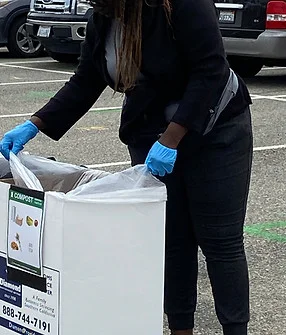
Never place a lone trash can. Every waste station must be a “3-Stream Station”:
- Compost (Green/Brown): Food scraps and certified compostable paper.
- Recycling (Blue): Clean bottles, cans, and cardboard.
- Landfill (Black/Gray): Only items that cannot be recovered (like film plastics).
If you can secure Pour-Away liquid disposal bins to prevent contamination of recyclables and excess weight in your dumpsters, place these around the venue near food and drink vendors and bars.
The Power of “Greening Teams”
Signage helps, but humans are better. Having “Waste Monitors” at high-traffic stations can reduce contamination by over 50%. These volunteers or staff members guide attendees, ensuring a half-eaten burger goes in the compost and the soda can goes in the recycling. Go digital wherever possible.

Phase 4: Post-Event Reporting
After the last truck leaves, the data work begins.
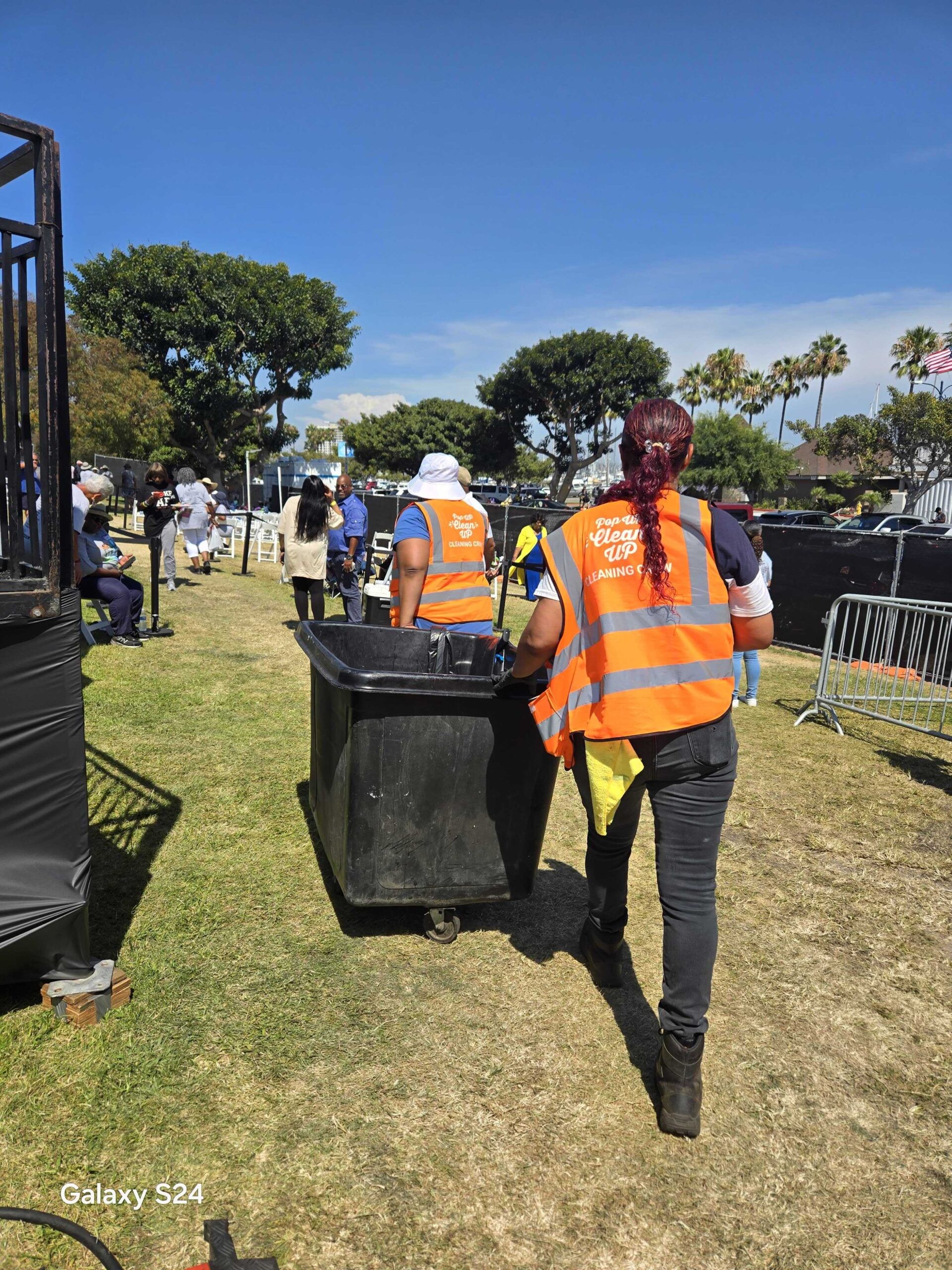
- The Final Sort: Have your crew do a “sweep” to ensure no recyclables ended up in the landfill pile. Send the crew through the venue first to pick up all recyclables. Then do a second sweep for landfill waste. Keep them separate by securing them in different bags.
- Collect Weights: Ask your hauler for weight tickets. You need to know exactly how many tons were diverted vs. sent to the landfill.
- Calculate Your Diversion Rate:

Submit Your Reports: If you are a Large Event, provide these metrics to the city or county to maintain your permits for next year.
The Checklist
Ready to start planning? Use this summarized checklist for California event waste management and landfill diversion to stay on track:
- Permit Check: Verified local waste ordinances.
- Landfill Diversion Paperwork: File with the city.
- Hauler Hookup: Scheduled 3-stream collection.
- Food Recovery: Signed agreement with a food bank.
- Signage: Created visual, photo-based bin labels.
- Vendor Audit: Approved all food ware materials.
- Staff Training: Briefed the “Greening Team” on sorting rules.
PopUP CleanUP can be your one-stop shop for event cleaning and landfill diversion. We offer pre, live, and post event cleanup, trash can, recycling bin, Pour-Away, and dumpster rentals, trash sorting, oil recycling, food recovery and compost solutions.