
Events produce copious amounts of waste–leftover food and drink, food wares, paper, aluminum cans, glass bottles, plastic banners and signage, cooking oil and more—but what’s often overlooked is the greywater generated from cooking, cleaning and hand-washing stations, particularly at outdoor food festivals.
While food trucks are required to contain their own wastewater containers and are critical, mandatory components of their plumbing system to prevent illegal dumping, festivals with stand alone food operators have to rent their own sinks and arrange some method of containment until that greywater can be responsibly disposed.
Sealed, dedicated tanks or barrels can be attached to portable sinks and handwashing stations These barrels can be removed off-site to dump the water safely elsewhere, or, a truck with a bigger water container, like a septic tank, and a hose, can suck the water out for removal separate from the barrels.
What is Greywater?
Wastewater is categorized by source or by contaminants. Domestic wastewater contains human waste, food scraps, soaps, etc. Industrial wastewater contains chemicals and heavy metals from manufacturing, mining, or chemical processes. Agricultural runoff carries pesticides, fertilizers and animal waste. Stormwater refers to rainwater runoff which picks up debris oil, and pollutants.
Festival wastewater falls under the Domestic level and is further categorized into blackwater (toilet water and water with harmful chemicals) and greywater from shower, baths, sinks. Greywater generally lacks pathogens, but can create microorganisms that can breed over time.
Why Greywater Management Matters
Greywater collection and removal is essential for a variety of reasons:
The Environment — Most festivals are held outdoors in natural surroundings, whether a park or an open field. Greywater produced from a food stall can produce water contaminated with grease, soap, food particles, and other chemicals. Not only does this smell rancid, but it also can attract pests and breed microorganisms, all of which can pollute groundwater and generate dead patches of dirt.
Health — Spilled greywater can expose guests to bacteria and germs, causing illness and rarely, but at times, even death. Moreover, spilled greywater on slick surfaces can cause guests to slip and fall.
Venue Appearance — No one wants to smell dirty water or step around or through it while enjoying a food festival. In fact, there is no quicker way to turn people’s stomachs than have them smell disgusting odors while feeding them food.
Most areas in the world regulate festivals and producers are required to have a wastewater management plan in place into order to obtain permits. Removal isn’t just a nice-to-have, it’s mandatory.
Best Practices
The most important considerations of greywater management are capacity, placement, and portability. It’s always better to overestimate how much capacity is needed in order to prevent overflow. How many barrels or tanks do you need? That depends of course on how many guests in attendance, how much food is being cooked and served, and how many days the festival is scheduled to go on.
Barrels and tanks need to be sturdy, sealable, and easy to move with forklifts and dollies. Where you place these containers is critical. Typically they are placed behind the food vendor areas, away from guest foot traffic but within a short distance from the clean water source for easy emptying.
Greywater tanks should always be separate from blackwater. Raw sewage and porta-potty waste require much heavier processing and chemicals during treatment and filtration. Avoid cross-contamination of these two wastewater streams.
If the festival is scheduled to be held over a series of days or weeks, scheduling pump-outs with properly equipped septic or vacuum pump equipment is critical to prevent overflow emergencies. Tanks and barrels should be emptied at least once a day, preferably during off hours since the process is a bit unwieldy as well as noisy. At very high-volume events, two pump outs a day might be necessary.
Making sure the containers are hooked up properly and have leak-proof connections goes without saying. No free-flowing hoses should be left to allow dirty water to seep into the ground.
Remind vendors that fats, oils, and large food scraps should be disposed of separately (and can be recycled into biodiesel and compost respectively) in order to prevent clogs in the pipes and tanks.

How Many Barrels Do I Need?
For smaller festivals, each food stall should have at least one 50 gallon or 200 liter container.
For large multi-day festivals (think Coachella), more extensive, high-capacity tanks and pump-outs will be necessary. A large festival with over 50 food vendors might need three or four 5000 liter tanks.
If a venue has existing infrastructure, such as a fairground, stadium, or urban park, temporary kitchen sinks can be set up to sewer hookups. The greywater then goes into the municipal sewer system. However, grease traps will still be essential.
Never use storm drains for greywater because those lead to the rivers and oceans and leave the water untreated, which can be, as noted above, environmentally catastrophic.
For more remote events (like Burning Man), the lack of infrastructure means that the organizer must be self-sufficient and plan well ahead with secondary containment tanks and spill response materials in case of an accident.
Accidental Spill Management
What to do if you do encounter an accidental spill? Cordon off the area immediately from guests and use sand, absorbent pads or sawdust to contain and soak up the liquid.
Ground surface disinfectants should be thoroughly spread on any area where the greywater has spilled. Having backup containers, pumps, and generators in case one bursts or unexpectedly fills up is highly advisable in the event of such situations.
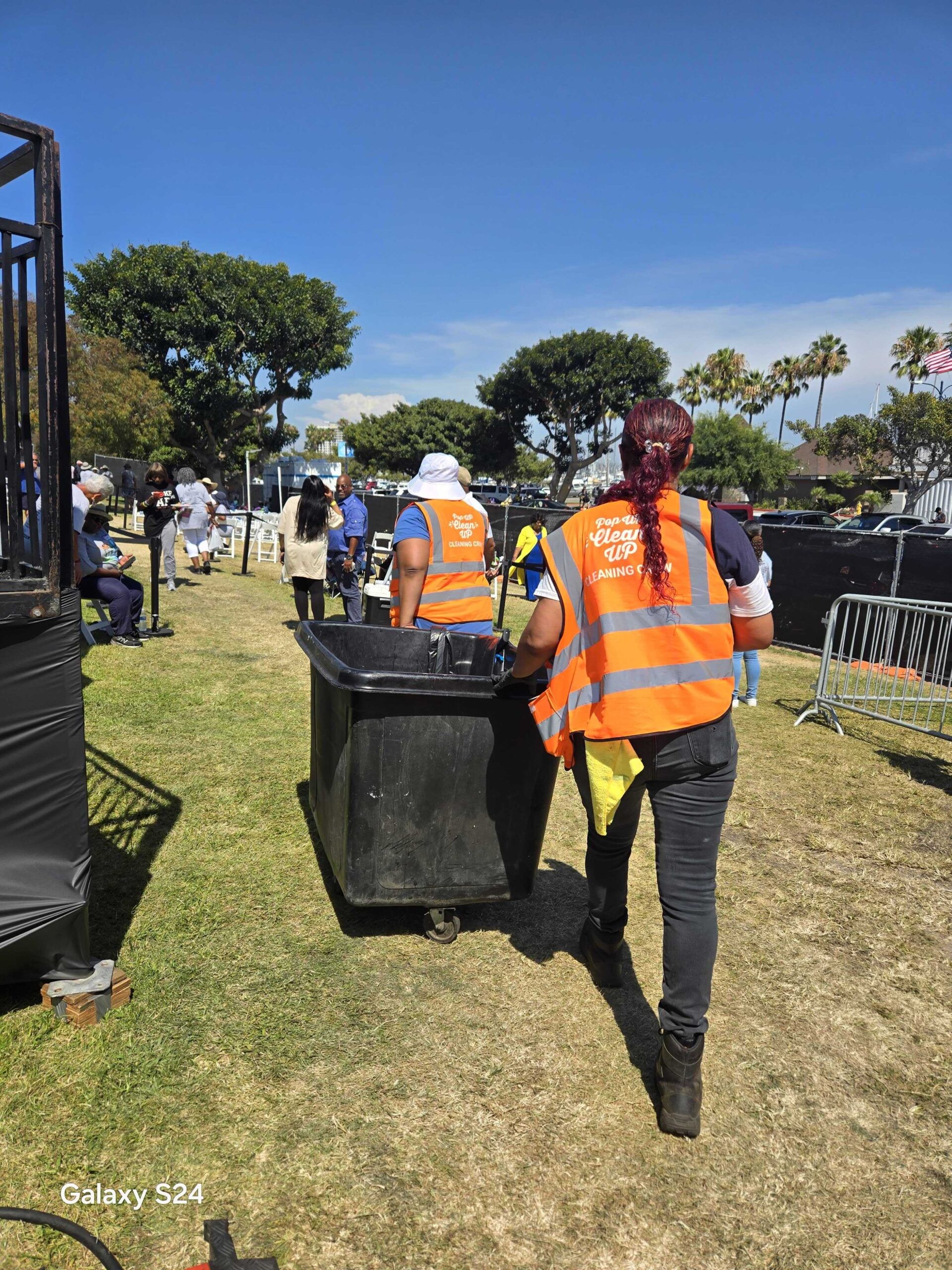
A successful wastewater management plan is an invisible wastewater management plan, where your guests go about enjoying the food and entertainment, blissfully unaware of the logistics. If you need someone to do the dirty work, PopUP CleanUP has experience handling festival wastewater removal and can put together a comprehensive plan.