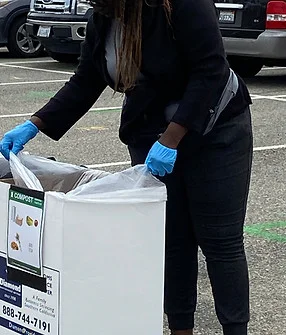
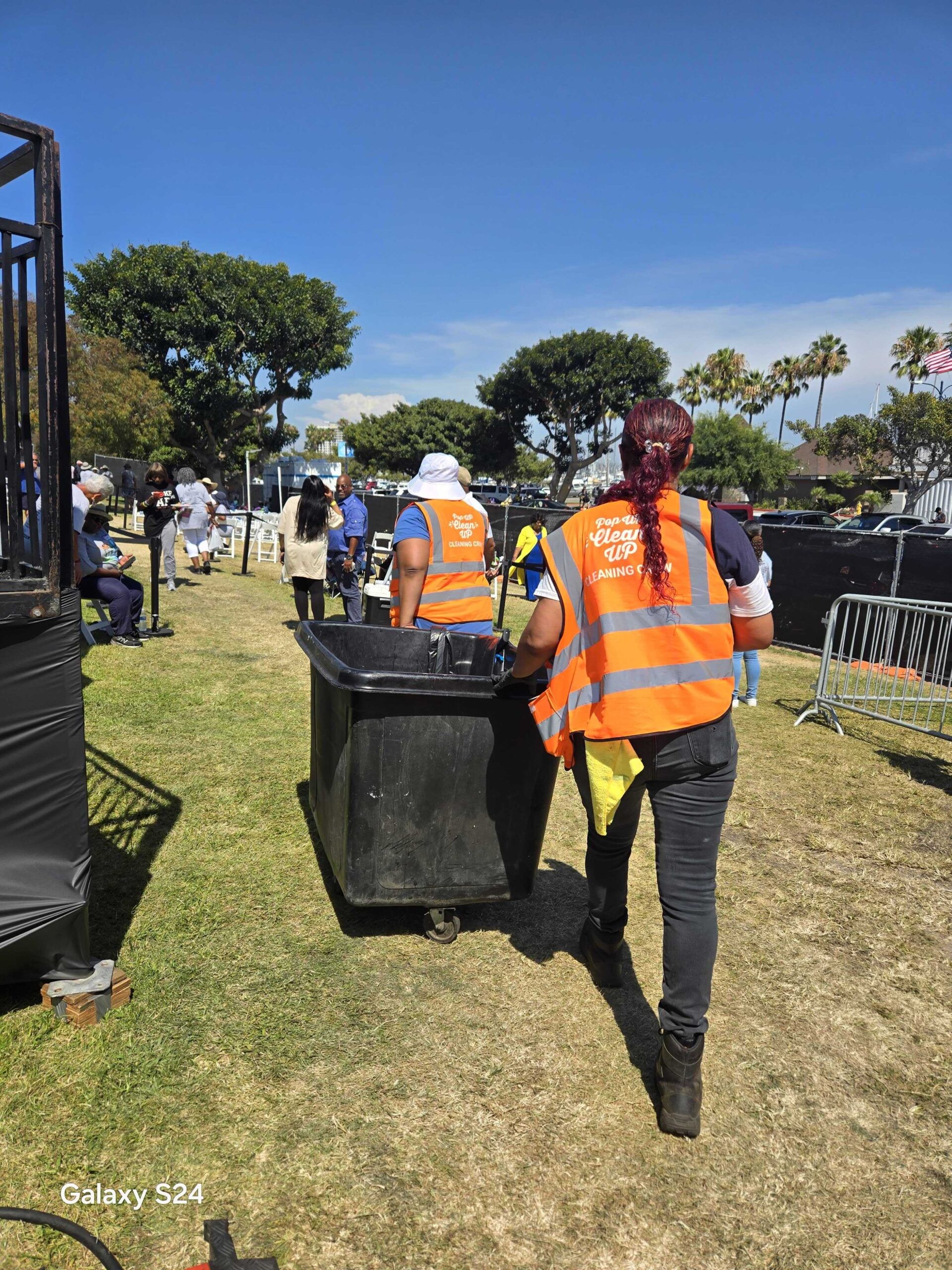
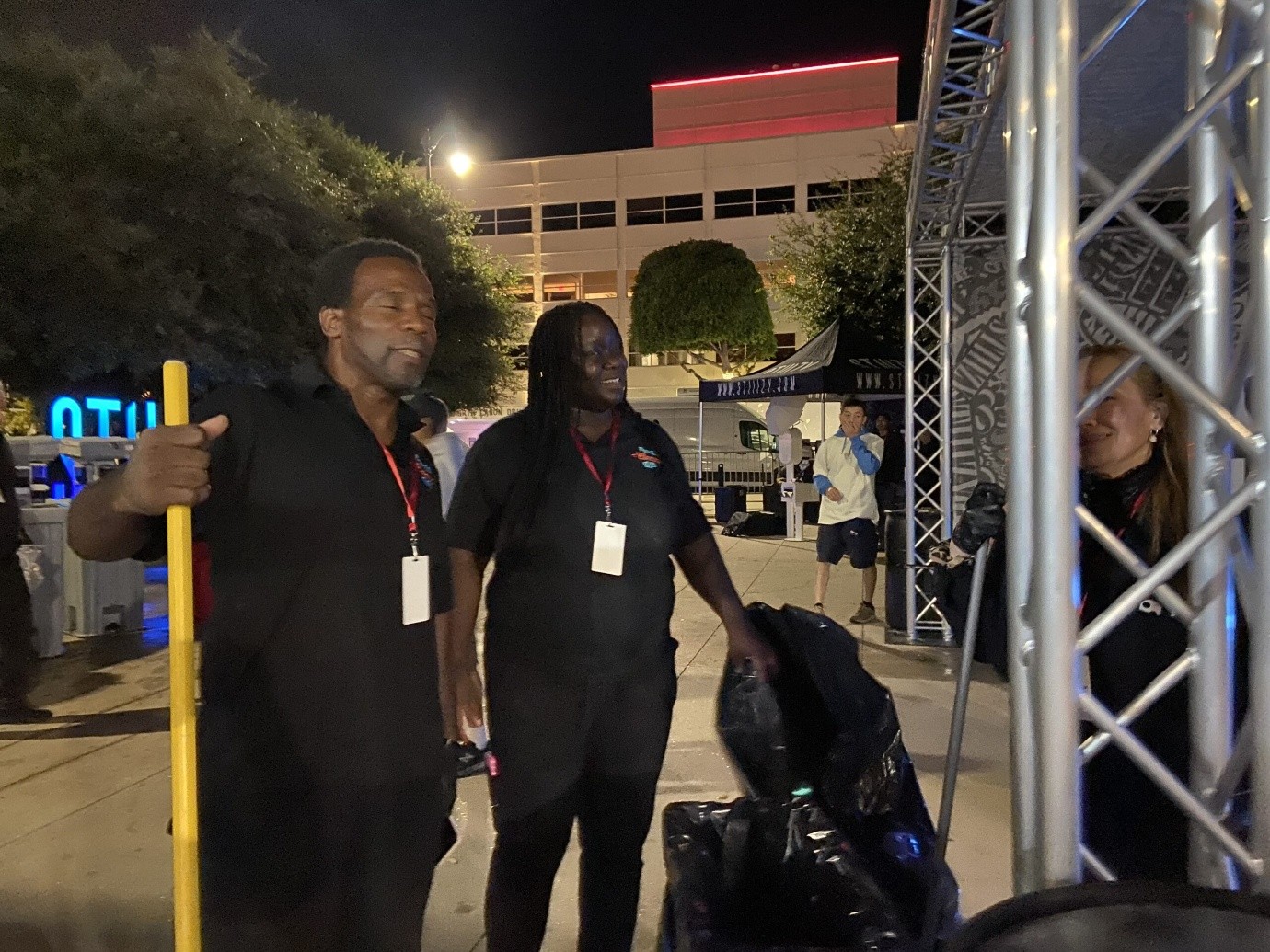
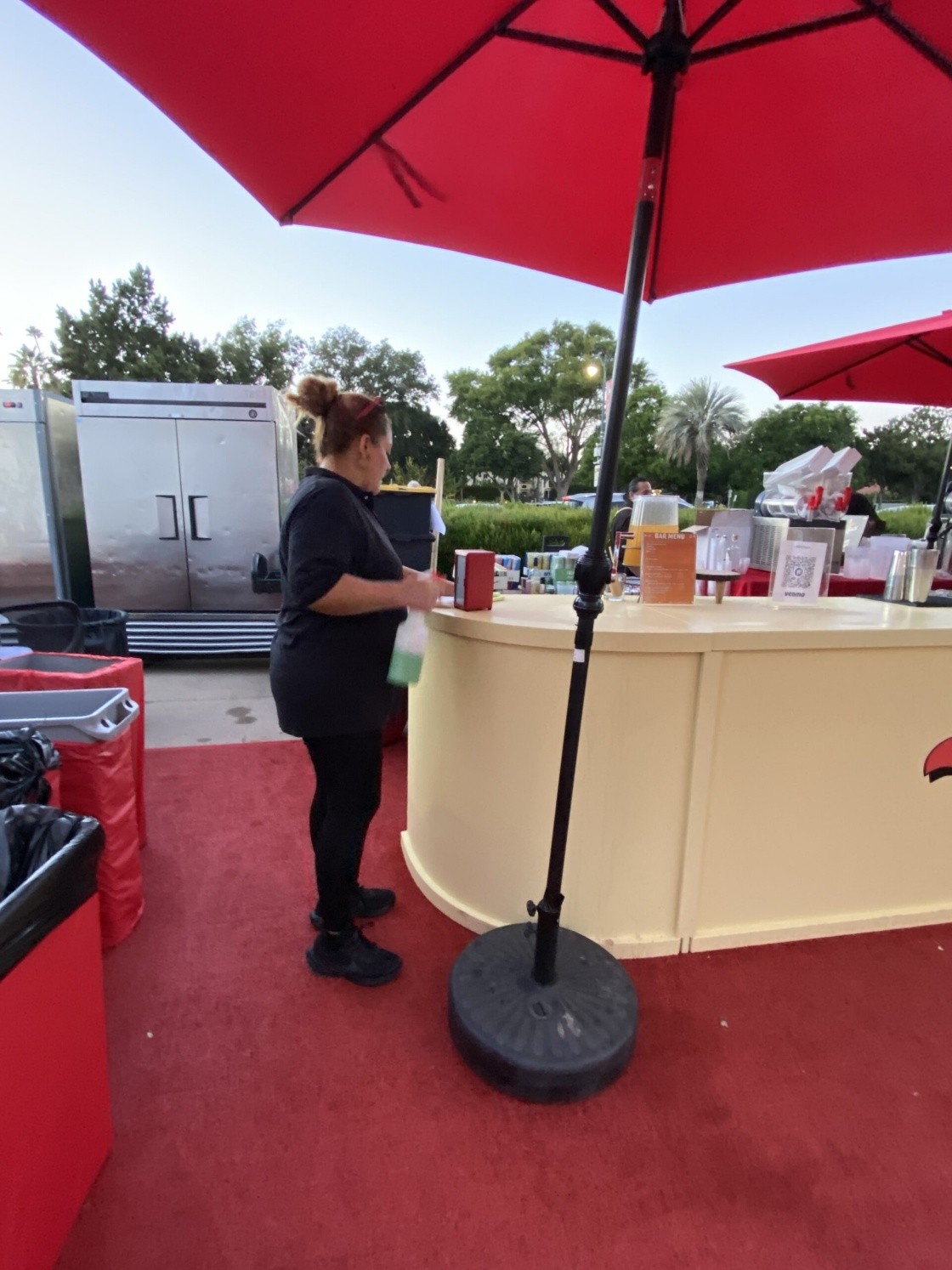
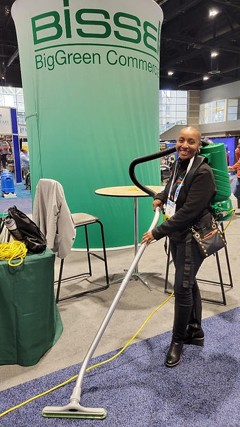
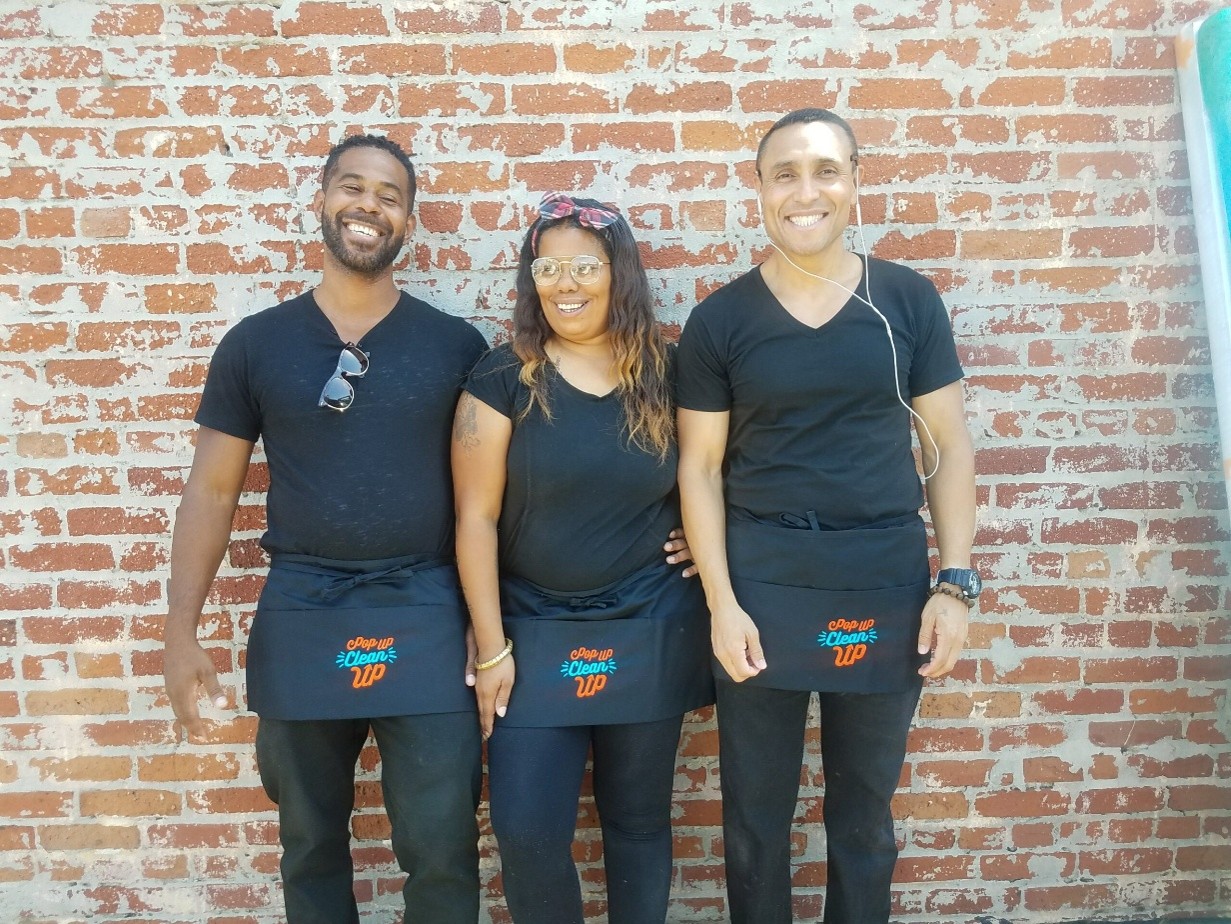
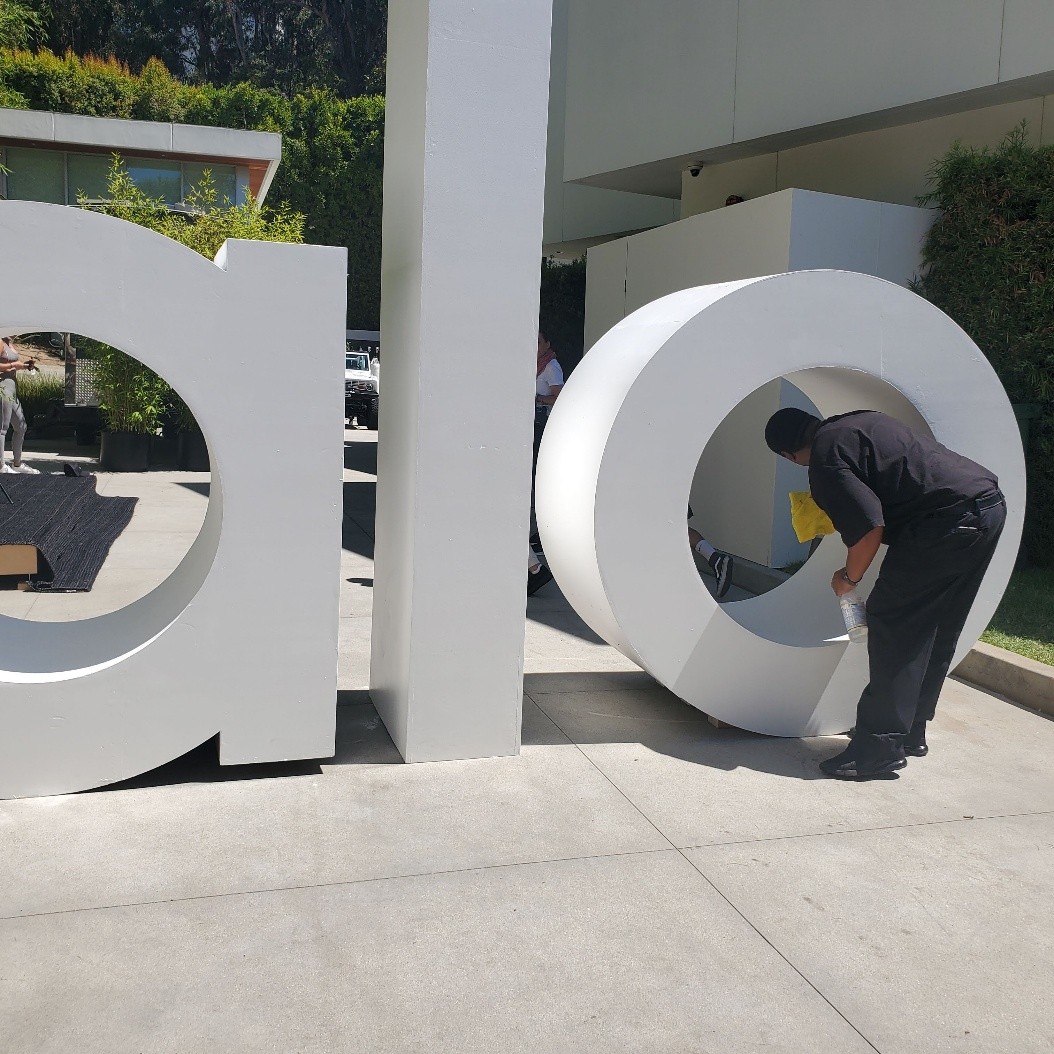
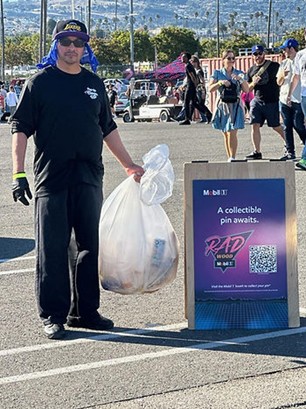
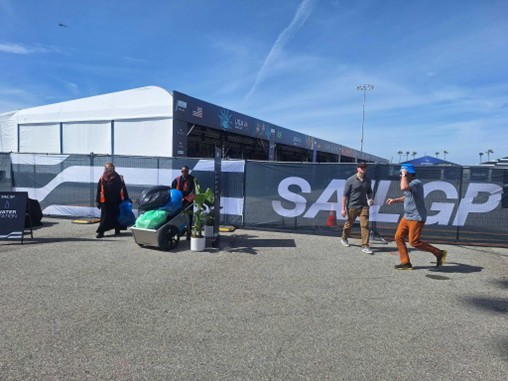
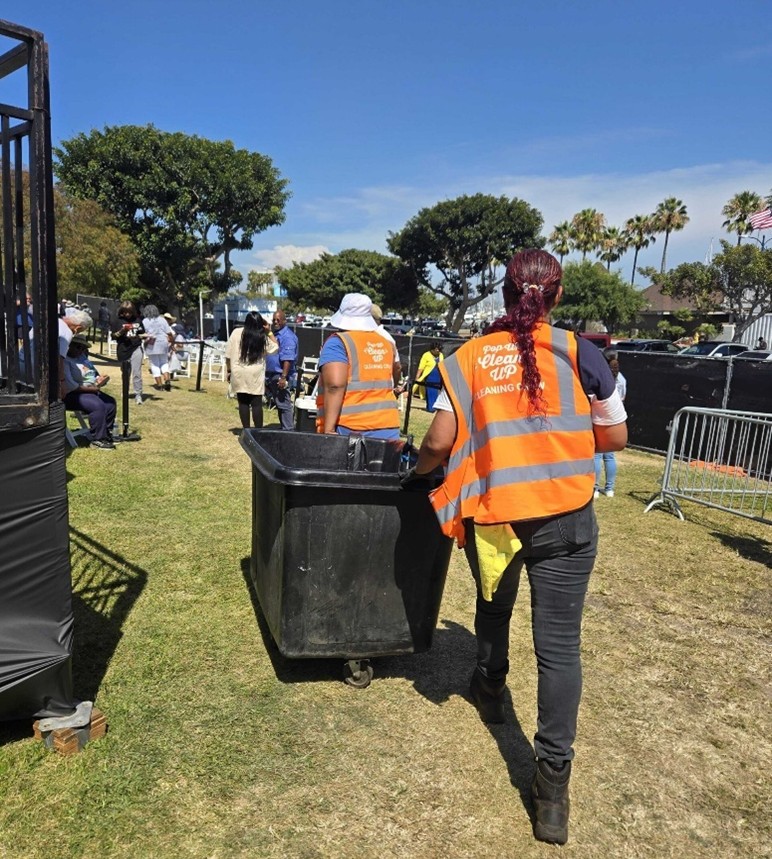
PopUP CleanUP offers a variety of different uniform options to match the tenor and needs of your event. From button down shirts to branded vests and polos, we can provide formality or visibility. While some events, like awards shows and black tie galas, may benefit from black button down attire, for most events, visibility helps both the client and the guests find crew members when assistance is needed and see who our crew members are and that they are at work. Regardless of uniform, all of our cleaners wear closed-toed non-slip shoes.
This week we are turning the spotlight on event producer Bianca Lynn Hammonds who our S1 Episode 5 guest on our podcast Celebrate & Chill. Bianca is a true force in the world of events, content creation, and life coaching. PopUP CleanUP has worked with Bianca on an Amazon Music Live for Thursday night NFL broadcasts, and we've seen firsthand the amazing, inspiring energy Bianca brings to every project. But Bianca is more than just a talented producer; she’s an inspiring example of how to navigate career setbacks, harness adaptability, and use life's challenges to build a stronger foundation for yourself. Here's an unpacked look at her journey—from the world of television to launching major cultural events, and how two devastating layoffs ultimately led her to her calling as a life coach.
Planning an event with food vendors, from a small fair to a large festival, means planning for the safe and responsible disposal of Used Cooking Oil (UCO). Improper disposal, like dumping oil down drains or on the ground, is illegal, environmentally harmful, and can result in significant fines. To help you manage UCO effectively and ensure compliance, we've broken down the process into a simple, three-part checklist based on the best practices for handling UCO.
We have serviced food festivals before, and as is the case with any event serving vast quantities of food, there are many moving logistical parts and many areas where those logistics can fall off the rails if everyone is not on the same page. For these reasons, it's incredibly helpful to have pre-production meetings involving all of the vendors to ensure communication and prevent unnecessary issues from occurring.
Recently, we were hired to provide live and post-event cleanup for a gender reveal party that included a confetti canon. It was an incredibly windy day, and the party was in an outdoor backyard garden at a private home next to a hillside that belonged to their neighbor. The confetti canon blew. The wind picked it up and blew it away, spreading the confetti all over the hillside. The client called and asked us to clean up the hillside which was not the address contracted and presented a number of different challenges.
As we discussed in this blog post, Construction vs. Event CleanUP, construction cleaning involves a different set of protocols including more protective PPE, heavy duty chemicals and more sophisticated equipment. On another level, construction cleanup can also subject workers to other hazards, one of which is exposure to asbestos. Used for thousands of years dating back to the Stone Age, asbestos is made of long, thin fibrous crystals called silicate minerals which are toxic and carcinogenic. While many of these fibers are carried away our coughed up in a layer of mucus that protects our lungs, some fibers will lodge into lung tissues where they cause damage for decades until the victim becomes terminally ill with mesothelioma, asbestosis, or lung cancer.
For any event, trash removal and on-site waste solutions are paramount for making the event go smoothly and reducing the amount of work post-event. Whether it's waste from concession stands or food trucks, swag, floral arrangements, or party decor, events generate monumental amounts of trash. Most event venues do not have the capacity for trash generated, particularly outdoor parks and residential locations. For this reason, dumpsters become necessary—but how many do you need?
Sail Grand Prix is an international sailing competition featuring national teams racing high-speed hydrofoil F50 catamarans in various cities around the world including Long Beach, San Francisco and New York among others. This year, PopUP CleanUP was commissioned to clean for the Long Beach leg of the multi-city competition where NorthStar Canada won, skippered by Giles Scott.
Earlier, we posted an article, How Many Porters Do I Need for My Event? where we stated that while we generally suggest one cleaner for every 250 people (except one might want two cleaners for the first 250 and sometimes three for up to 500), however, as your event scales in size, that 1:250 person ratio expands, unless your scope of work does as well. Staffing in general depends upon the following parameters:
Andy Warhol once said in the future, everyone will be famous for fifteen minutes. With social media, that future has already come and gone, but if he were around today, Warhol might have revised his dictum to: in the future, everyone will have their own podcast.
Yes, most of us are heading into the dog days of summer with a mindset for easy beach reads and spine tingling thrillers. Sure, there are also some literary gems in the mix, page turners that somehow also feel edifying because they are so well written, but this is hardly the time when people think, "Oh I should bust out that opus on accounting." However, August is usually a slower month for service-based businesses (restaurants and bars aside) as many people go on vacation, and now is actually the perfect time to fit in some entrepreneurial learning in between your Taylor Jenkins Reid and James Patterson.
SB 54, also known more extensively as the Plastic Pollution Prevention and Packaging Producer Responsibility Act, went into effect in March (2025). Because packaging makes up for more than 50% of what we dump into landfills by volume according to the CalRecycle webpage devoted to explaining this law, SB 54 was passed to reduce our dependence on disposables and make producers accountable for creating waste that does not degrade.
If you're throwing a large party—whether it's a 200-person wedding or a 20,000-person outdoor festival—you're going to be generating trash, particularly if you're serving food or drink. For each meal, you can usually calculate about one to one-and-a-half pounds of trash per person. The more trash you anticipate, the more trash cans you will need positioned throughout the venue to avoid spillage and littering.
Recently we serviced a soap box race at a state capital that expected 20-40,000 people. The client originally requested 94 hours of labor from 13 cleaners with the following schedule: Saturday Live Event Cleaning: General Admission (1) supervisor 11:00am-5:00pm. (6 hours) General Admission (1) supervisor 9:00am-5:00pm (8 hours)
PopUP CleanUP attended Waste Expo 2025 in Las Vegas this past month, not as an exhibitor, but to roam the floor and learn more about one of the industries that figures prominently in what we do. With California mandating composting and recycling for large scale events and more corporations wanting those services for their events regardless of government mandates, we struck out to learn what was new and improved and to learn more about the waste industry.
In California, recycling is mandatory. It's mandatory for residential areas; it's mandatory for commercial facilities; it's also now mandatory for events of over 2000 guests. Only six states mandate recycling and those include Colorado, New Jersey, Washington, Oregon and Maine on top of the Golden State. That said, just because a state may not mandate it, that doesn't mean that recycling (and composting) in your state does not exist. In fact, every state boasts some kind of material reclamation facility and as technology advances and funding for infrastructure takes effect, access to these services are increasing, regardless of the political climate of your state.
Every event needs signage: Go here! The restrooms are there! The conference is in Room A. Your seat is located in Section B. However, most signage is made of plastic, particularly if the event is outdoors, and as we know, plastic is particularly problematic for planet Earth.
Manufacturers often advertise bioplastics as a compostable and more sustainable alternative to bioplastics, but is this actually true? Well...not really. Let's dive in and discuss further. What are bioplastics? Bioplastics are plastics derived from biological substances and renewable biomass sources rather than petroleum, many types of which are biodegradable. Some bioplastics are made from sugar cane to create polylactic acid (PLA), some are made from waste materials like straw, woodchips, sawdust and food waste. Most are made from starches and cellulose, and some are derived from protein sources.
If you’re an event producer considering putting on a large scale event in California, it’s critical to note that California has stringent environmental regulations aimed at curbing waste production and pollution and promoting landfill diversion strategies.
Construction vs. Event CleanUP Recently we serviced an event that had a significant construction build. They transformed the interior of a shop utterly with new floors, new tile in the bathroom, newly crafted carpentry and a new coat of paint. The producer admitted during the process that she had never had an event with such a significant production build.